

3dMDface™ System / 3dMDtrio™ System
The human face is the most studied and scrutinized anatomical structure in the world… and facial movement, expression, function, and speech are the most demanding to capture and reconstruct with near ground truth 3D-shape accuracy. The 3dMDface and 3dMDtrio systems were purpose-built for exactly that challenge.
With 3dMD’s latest generation dynamic 3D/4D capture systems, clinical teams are no longer limited to single static 3D scans of disparate facial expressions. Both the 3dMDface and 3dMDtrio systems capture a full progressive sequence of dense-surface facial images over time. The 3dMDtrio system additionally supports 3dMD’s downstream 3dMDtempus software enabling clinical teams to automatically landmark, track, measure, and analyze dynamic facial movement, expression, function, and speech (with audio sync) across the entire sequence. Single-snap static 3D scanning was the starting point for the neutral face in the early 2000s. The dynamic-3D/4D 3dMDface and 3dMDtrio systems are where the technology is today in 2026.
Capturing ear-to-ear full face coverage dynamically in 3D/4D, these 3dMD systems deliver real-world dense-surface facial data at the anatomical fidelity that the most demanding applications require. In healthcare, 3dMD data supports clinical teams in assessing and measuring morphological change throughout complex treatment cycles… from cleft lip and palate, craniofacial surgery, oral maxillofacial surgery (OMS), and orthognathic surgery through to facial palsy, trauma, reconstruction, and orthodontics. Beyond healthcare, the same near ground truth facial geometry powers AI and Machine Learning facial recognition, expression analysis, and Computer Vision training… human factors and fit design for head-worn devices including AR and VR headsets, eyewear, and respiratory protection… and real-world 3D/4D digital human development for AR|VR|XR environments. Learn why real-world dense-surface 3D face data sets the fidelity limit for AI face modeling.
Whatever the application or use case, the 3dMDface and 3dMDtrio systems capture and reconstruct it… in full 3D/4D dense-surface detail.
3dMDface™ System Product Specifications
| Region of Interest: | Provides 190-degree full face coverage [ear-to-ear]. Records a range of facial expressions, function, smile, and speech dynamically in 3D over a period of time (4D). |
| Capture Speed Options (3D frames per second): | 1-10fps, 1-30fps, or 1-60fps with high precision 3D shape information generated for each frame, regardless of capture speed. Run system in record, burst, or single snap mode. |
| 3D Image Reconstruction Technique: | Sophisticated software-driven triangulation technique called Active Stereo Photogrammetry. |
| 3D Image Reconstruction per Frame: | Automatic generation of an individual 3dMD image from all stereo viewpoints within the system to create a single continuous 3D point cloud or textured mesh (no manual stitching or registration needed per frame). |
| 3D Shape Accuracy: | Delivers ‘near-ground truth’, high-precision dense surface images with a linear accuracy range of 0.2mm or better... also known as first generation, Real-World data. |
| Output Options. | A progressive sequence of 3dMD images from a recording, a short progressive sequence of 3dMD images from a burst, and a single 3dMD image from a single snap. |
| Output. File Formats Supported: | obj, stl, ply, gltf, glb, x3d, 3mf, as well as all other industry-standard open formats for use in downstream 3dMD and third-party software. |
| System Configuration: | Incorporates optics-based technology with two (2) Modular Camera Units (MCUs) of six (6) machine vision cameras synchronized with a robust LED lighting system. |
| Camera Technology: | Industrial-grade Machine Vision camera technology. |
| Eye-Safe Lighting: | Safe and comfortable subject illumination within visible white light (100% LED lighting) which is helpful for prolonged sessions - no use of infrared (IR) or near Infrared (NIR) light waves. |
| Temporal Image Selection for Use Downstream: | Select the most optimal 3dMD images from the sequence [e.g. neutral, smile apex, mouth open, an infant in position after squirming all around, etc.]. |
| Environment: | Utilized in normal R&D lab, clinical, and studio environments. |
| Safety: | International UL and CE safety certification. |
| Upgrade Path to: | 3dMDtrio System (add 1 MCU) and a baseline 3dMDhead5 System (add 3 MCUs) or a specialized 3dMDhead System (add 5-7 MCUs) |
| Techniques and Technologies NOT Used by 3dMD: | To confirm, 3dMD does NOT use lasers, depth sensor cameras, pro/consumer cameras, or infrared (IR)/ near Infrared (NIR) light waves within its systems. 3dMD does NOT use a 'structured light' capture/reconstruction technique. |
| Technology Description Review Resource Prior to Publication: | If your team is describing 3dMD’s technology for publication, 3dMD is happy to review the section of the copy related to 3dMD and provide input, if needed, to ensure that the technology (only) is described correctly. Please contact review@3dMD.com. |
3dMDtrio™ System Product Specifications
| Region of Interest: | Provides 220-degree full face coverage [ear-to-ear-plus]. Captures a range of facial expressions, function, smile, and speech dynamically in 3D over a period of time (4D). |
| Capture Speed Options (3D frames per second): | 1-10fps, 1-30fps, or 1-60fps with high precision 3D shape information generated for each frame, regardless of capture speed. Run system in record, burst, or single snap mode. |
| 3D Image Reconstruction Technique: | Sophisticated software-driven triangulation technique called Active Stereo Photogrammetry. |
| 3D Image Reconstruction per Frame: | Automatic generation of an individual 3dMD image from all stereo viewpoints within the system to create a single continuous 3D point cloud or textured mesh (no manual stitching or registration needed per frame). |
| 3D Shape Accuracy: | Delivers ‘near-ground truth’, high-precision 3D dense surface images with a linear accuracy range of 0.2mm or better… also known as first generation, Real-World data. |
| Output Options: | A progressive sequence of 3dMD images from a recording, a short progressive sequence of 3dMD images from a burst, and a single 3dMD image from a single snap. |
| Output. File Formats Supported: | obj, stl, ply, gltf, glb, x3d, 3mf, as well as all other industry-standard open formats for use in downstream 3dMD and third-party software. |
| Camera Technology: | Industrial-grade Machine Vision camera technology. |
| Eye-Safe Lighting: | Safe and comfortable subject illumination within visible white light (100% LED lighting) which is necessary for prolonged sessions with subjects - no use of infrared (IR) or near Infrared (NIR) light waves. |
| 3dMD Image(s) Downstream: | Either 1) select the most optimal 3dMD images from the sequence [e.g. neutral, smile apex, mouth open, an infant in position after squirming all around, etc.] OR 2) import the entire 3dMD image sequence into the downstream 3dMDtempus software to transition a project from a static-3D to a dynamic-3D/4D dense-surface mobility paradigm. |
| Environment: | Utilized in normal R&D lab, clinical, and studio environments. |
| Safety: | International UL and CE safety certification. |
| Upgrade Path to: | A baseline 3dMDhead5 System (add 2 MCUs) or a specialized 3dMDhead System (add 4-9 MCUs). |
| Third-Party Device Synchronization: | For advanced customer teams who qualify, 3dMD offers a range of 3dMDsync Unit options – e.g. Synchronization Output only, Synchronization Output and Input, and Synchronization Output and Input with Frame Level timestamping functionality. |
| Techniques and Technologies NOT Used by 3dMD: | To confirm, 3dMD does NOT use lasers, depth sensor cameras, pro/consumer cameras, or infrared (IR)/near Infrared (NIR) light waves within its systems. 3dMD does NOT use a 'structured light' capture/reconstruction technique. |
| Technology Description Review Resource Prior to Publication: | If your team is describing 3dMD’s technology for publication, 3dMD is happy to review the section of the copy related to 3dMD and provide input, if needed, to ensure that the technology (only) is described correctly. Please contact review@3dMD.com. |
3dMDhead™ System Series
The human head is one of the most clinically significant anatomical structures to monitor, measure, and quantify over time as it too includes facial movement, expression, function, and speech, which are the most demanding to capture and reconstruct with near ground truth 3D-shape accuracy. The 3dMDhead system series was purpose-built for exactly that challenge.
With 3dMD’s latest generation dynamic 3D/4D capture systems, clinical teams are no longer limited to taking one 3D image at a time… ensuring the patient’s head position and facial expression were perfect in that single instance. 3dMDhead systems enable clinical teams to capture a progressive sequence of dense-surface images over a period of time… selecting the optimal image from the sequence rather than relying on a single snap image. The advantage is immediate and practical… think traditional 2D video versus a single 2D photograph. Particularly valuable when imaging restless toddlers and young children who cannot remain still. Single-snap static 3D capture was the starting point in the early 2000s. The dynamic-3D/4D 3dMDhead system is where the technology is today in 2026.
Capturing 360-degree full head and face coverage dynamically in 3D/4D, the 3dMDhead delivers real-world dense-surface head data at the anatomical fidelity that the most demanding applications require. In addition to assessing and measuring morphological facial change, 3dMDhead data supports clinical teams in monitoring and measuring cranial morphology change throughout complex pediatric treatment cycles… from craniosynostosis, plagiocephaly, and brachycephaly through to craniofacial and reconstructive surgery. Beyond healthcare, the same near ground truth head geometry powers AI and Machine Learning morphable head model development, Computer Vision training… human factors and fit design for head-worn devices including AR and VR headsets, helmets, eyewear, and hearables… and real-world 3D/4D digital human head development for AR|VR|XR environments.
Wearable design traditionally relies on static 3D scans… optimising fit for a head shape that is standing still. But people move. They talk, chew, turn, look down, and express. A device that fits perfectly on a static 3D scan can shift, pinch, or lose optical alignment during natural daily use. 3dMDhead’s dynamic-3D/4D capture capability enables design teams to evaluate fit, stability, and comfort throughout real subject movement. Capturing subjects wearing and not wearing a device with the same system platform enables direct comparison of contact areas, interference points, and as-worn position across users.
3dMDhead system configurations range from the baseline 5 MCUs for general head geometry through to 12 MCUs for teams requiring dedicated coverage of complex anatomy such as the ear region, eye region when capturing with a device on the head, and other areas of interest. Leading AR companies such as Magic Leap and many others use 3dMD’s anthropometric data as the foundation of their device design process… capturing thousands of subjects across age, gender, and ethnic background to design devices around real human variability rather than a single average fit model.
Every 3dMD head scan is a permanent, re-harvestable data asset. Dense-surface 3D meshes can be re-analysed, re-measured, and re-harvested as research evolves, AI models develop, and new product questions emerge. The value of the data grows over time.
Whatever the application or use case, 3dMDhead systems capture and reconstruct it… in full 3D/4D dense-surface detail.
3dMDhead™ System Product Specifications
| Region of Interest: | Provides 360-degree full head and face coverage. Captures a range of head postures, as well as facial expressions, functions, smile, and speech dynamically in 3D over a period of time (4D). |
| Capture Speed Options (3D frames per second): | 1-10fps, 1-30fps, or 1-60fps with high precision 3D shape information generated for each frame, regardless of capture speed. Run system in record, burst, or single snap mode. |
| 3D Image Reconstruction Technique: | Sophisticated software-driven triangulation technique called Active Stereo Photogrammetry. |
| 3D Image Reconstruction per Frame: | Automatic generation of an individual 3dMD image from all stereo viewpoints within the system to create a single continuous 3D point cloud or textured mesh (no manual stitching or registration needed per frame). |
| 3D Shape Accuracy: | Depending on system configuration... delivers ‘near-ground truth’, high-precision 3D dense surface image with a linear accuracy range of 0.2mm or better… also known as first generation, Real-World data. |
| Output Options: | A progressive sequence of 3dMD images from a recording, a short progressive sequence of 3dMD images from a burst, and a single 3dMD image from a single snap. |
| Output. File Formats Supported: | obj, stl, ply, gltf, glb, x3d, 3mf, as well as all other industry-standard open formats for use in downstream 3dMD and third-party software. |
| Baseline 3dMDhead5 System Configuration: | 3dMDhead5 System. Incorporates optics-based technology with five (5) Modular Camera Units (MCUs) of 15 machine vision cameras synchronized with a robust LED lighting system. |
| Specialized 3dMDhead System Configurations: | Depending on area of interest requirements, 3dMD can configure the 3dMDhead5 System to include additional MCUs aimed to increase detail in the eye and ear regions. 3dMDhead system configurations range from the baseline of 5 MCUs|15 machine vision cameras to 12 MCUs|36 machine vision cameras. |
| Camera Technology: | Industrial-grade Machine Vision camera technology. |
| Eye-Safe Lighting: | Safe and comfortable subject illumination within visible white light (100% LED lighting) which is necessary for prolonged sessions with subjects - no use of infrared (IR) or near Infrared (NIR) light waves. |
| 3dMD Image(s) Downstream: | Either 1) select the most optimal 3dMD images from the sequence [e.g. neutral, smile apex, mouth open, an infant in position after squirming all around, etc.] OR 2) import the entire 3dMD image sequence into the downstream 3dMDtempus software to transition a project from a static-3D to a dynamic-3D/4D mobility paradigm. |
| Environment: | Utilized in normal R&D lab, clinical, and studio environments. |
| Safety: | International UL and CE safety certification. |
| Upgrade Path to: | Any specialized 3dMDhead System (add 2-7 MCUs). |
| Third-Party Device Synchronization: | For advanced customer teams who qualify, 3dMD offers a range of 3dMDsync Unit options – e.g. Synchronization Output only, Synchronization Output and Input, and Synchronization Output and Input with Frame Level timestamping functionality. |
| Techniques and Technologies NOT Used by 3dMD: | To confirm, 3dMD does NOT use lasers, depth sensor cameras, pro/consumer cameras, or infrared (IR)/near Infrared (NIR) light waves within its systems. 3dMD does NOT use a 'structured light' capture/reconstruction technique. |
| Technology Description Review Resource Prior to Publication: | If your team is describing 3dMD’s technology for publication, 3dMD is happy to review the section of the copy related to 3dMD and provide input, if needed, to ensure that the technology (only) is described correctly. Please contact review@3dMD.com. |
3dMDhand™ System Series
The human hand is one of the most complex anatomical structures in nature… and one of the most demanding subjects to capture and reconstruct with near ground truth 3D-shape accuracy. Wearable devices, controllers, smart gloves, and gesture-based interfaces are not designed around a skeleton. They are designed around the actual surface of the hand they need to fit… across the full range of hand shapes, sizes, and proportions in the intended user population. Motion capture gloves record joint angles and finger kinematics, but the glove is on the hand during capture, physically altering the surface and making it impossible to capture the real 3D geometry of the hand or evaluate how a product prototype interacts with bare skin. The 3dMDhand system series was purpose-built to capture what no other method can… the actual dense-surface 3D geometry of the hand in motion.
Capturing 360-degree single or bimanual hand coverage dynamically in 3D/4D, the 3dMDhand delivers real-world dense-surface hand data at the anatomical fidelity that the most demanding applications require. No capture device worn on the hand. No instrument between the hand and the object of interaction. When a subject holds a device prototype or wears a product on their hand or wrist inside the 3dMD system, the capture is of the real interaction… the actual contact areas, gaps, and fit between the device and the hand surface as they exist in the real world. A glove-based system cannot provide this data because the glove itself is the capture instrument.
In healthcare, 3dMDhand data supports the assessment of hand mobility and function before and after surgery, tracks morphological change due to aging, arthritis, or injury, and provides the precise anatomical geometry needed for custom splint, orthotic, and prosthetic design. Beyond healthcare, before a humanoid robot hand can be teleoperated or trained, it needs to be designed… and achieving human-like dexterity requires understanding the actual 3D surface geometry, soft tissue deformation, and skin compliance of real human hands. Beyond design, dexterous humanoid robot hand training demands real grip dynamics, precision tool use, and bimanual coordination that sparse markers and 2D video cannot spatially reconstruct. Wearable tech and smart glove design require precise real-world 3D hand shape across diverse subject populations. Computer Vision and AI teams building hand gesture recognition systems, AR/XR UI control applications, and hand models need real-world 3D/4D hand sequences. The research team at the Max Planck Institute for Intelligent Systems, Perceiving Systems, in Tübingen developed MANO with 3dMD, a foundational hand model that became a cornerstone of computer vision research into human hand representation. Meta Reality Labs recently released PALM… 13k registered 3dMD hand scans from 263 subjects with 90k calibrated 3dMD multiview RGB images, each with corresponding MANO registrations. When ground truth hand data matters, it is captured on 3dMD.
Every 3dMD hand scan is a permanent, re-harvestable data asset. Dense-surface 3D meshes can be re-analyzed, re-measured, and re-harvested as research evolves, AI models develop, and new product questions emerge. The value of the data grows over time.
Whatever the application or use case, 3dMDhand systems capture and reconstruct it… in full 3D/4D dense-surface detail.
3dMDhand™ System Product Specifications
| Region of Interest: | Depending on system configuration... provides 360-degree full hand coverage for a single hand or both hands. Captures a range of hand articulations, gestures, actions, and interactions dynamically in 3D over a period of time (4D). |
| Capture Speed Options (3D frames per second): | 1-10fps, 1-30fps, or 1-60fps with high precision 3D shape information generated for each frame, regardless of capture speed. Run system in record, burst, or single snap mode. |
| 3D Image Reconstruction Technique: | Sophisticated software-driven triangulation technique called Active Stereo Photogrammetry. |
| 3D Image Reconstruction per Frame: | Automatic generation of an individual 3dMD image from all stereo viewpoints within the system to create a single continuous 3D point cloud or textured mesh (no manual stitching or registration needed per frame). |
| 3D Shape Accuracy: | Depending on system configuration... delivers 'near-ground truth', high-precision 3D dense surface images with a linear accuracy range of 0.7mm or better… also known as first generation, Real-World data. |
| Output Options: | A progressive sequence of 3dMD images from a recording, a short progressive sequence of 3dMD images from a burst, and a single 3dMD image from a single snap. |
| Output. File Formats Supported: | obj, stl, ply, gltf, glb, x3d, 3mf, as well as all other industry-standard open formats for use in downstream 3dMD and third-party software. |
| Baseline 3dMDhand System Configuration: | 3dMDhand7 System captures a single hand. Incorporates optics-based technology with seven (7) Modular Camera Units (MCUs) of 21 machine vision cameras synchronized with a robust LED lighting system. |
| Specialized 3dMDhand System Configurations: | Depending on requirements [single or two hands; interaction with each other or an inanimate object; etc.], 3dMD can configure the 3dMDhand System to include additional MCUs to accommodate these requirements. 3dMDhand system configurations range from the baseline of 7 MCUs|21 machine vision cameras to 16+ MCUs|48+ machine vision cameras. |
| Camera Technology: | Industrial-grade Machine Vision camera technology. |
| Eye-Safe Lighting: | Safe and comfortable subject illumination within visible white light (100% LED lighting) which is necessary for prolonged sessions with subjects - no use of infrared (IR) or near Infrared (NIR) light waves. |
| 3dMD Image(s) Downstream: | Either 1) select the most optimal 3dMD images from the sequence [e.g. an interaction, gesture, finger articulation, etc.] OR 2) import the entire 3dMD image sequence into the downstream third-party/in-house software to transition a project from 2D video (or sparse-3D) to a dynamic-3D/4D dense-surface mobility paradigm. |
| Environment: | Utilized in normal R&D lab, clinical, and studio environments. |
| Safety: | International UL and CE safety certification. |
| Upgrade Path to: | Any specialized 3dMDhand System (add 2-9+ MCUs). |
| Third-Party Device Synchronization: | For advanced customer teams who qualify, 3dMD offers a range of 3dMDsync Unit options – e.g. Synchronization Output only, Synchronization Output and Input, and Synchronization Output and Input with Frame Level timestamping functionality. |
| Techniques and Technologies NOT Used by 3dMD: | To confirm, 3dMD does NOT use lasers, depth sensor cameras, pro/consumer cameras, or infrared (IR)/near Infrared (NIR) light waves within its systems. 3dMD does NOT use a 'structured light' capture/reconstruction technique. |
| Technology Description Review Resource Prior to Publication: | If your team is describing 3dMD’s technology for publication, 3dMD is happy to review the section of the copy related to 3dMD and provide input, if needed, to ensure that the technology (only) is described correctly. Please contact review@3dMD.com. |
3dMDbody™ System Series
The human body in motion is the ultimate real-world data challenge… capturing and reconstructing the full anatomical complexity of posture, movement, and dynamic shape change across diverse subject populations with near ground truth 3D-shape accuracy. The 3dMDbody system series was purpose-built for exactly that challenge.
Capturing 360-degree full body coverage dynamically in 3D/4D, the 3dMDbody delivers real-world dense-surface body data at the anatomical fidelity that the most demanding applications require. Unlike sparse marker motion capture systems and parametric model-dependent approaches whose output is only as accurate as the 3D model they started with, 3dMDbody captures and reconstructs the actual dense-surface 3D shape of every subject… in motion, with sub-millimeter accuracy, and without markers, suits, or synthetic inference. In healthcare, 3dMDbody data supports clinical teams in monitoring and measuring postural, morphological, and gait change throughout treatment cycles… from scoliosis and spinal deformity through to orthopedic assessment, lymphedema, and body composition analysis. Beyond healthcare, the same near ground truth full 3dMDbody geometry powers AI and Machine Learning body model development and Computer Vision training such as the SMPL model by the world-class 3dMD customer team at Max Planck Institute for Intelligent Systems, Perceiving Systems, in Tübingen… human factors, size and fit, and ergonomic design across performance sportswear, military uniforms, protective equipment, and high-performance vehicle and workspace environments… wearable tech calibration across diverse body types… and real-world 3D/4D digital human body development for humanoid robotics training and XR environments.
Whatever the application or use case, 3dMDbody systems capture and reconstruct it… in full 3D/4D dense-surface detail.
3dMDbody™ System Product Specifications
| Region of Interest: | Provides 360-degree full body coverage. Captures a range of postures, poses, actions, gestures, etc. dynamically in 3D over a period of time (4D). |
| Capture Speed Options (3D frames per second): | 1-10fps, 1-30fps, 1-60fps, or 1-120fps with high precision 3D shape information generated for each frame, regardless of capture speed. Run system in record, burst, or single snap mode. |
| 3D Image Reconstruction Technique: | Sophisticated software-driven triangulation technique called Active Stereo Photogrammetry. |
| 3D Image Reconstruction per Frame: | Automatic generation of an individual 3dMD image from all stereo viewpoints within the system to create a single continuous 3D point cloud or textured mesh (no manual stitching or registration needed per frame). |
| 3D Shape Accuracy: | Delivers 'near ground truth', high-precision 3D dense surface images with a linear accuracy range of 0.7mm or better… also known as first generation, Real-World data. |
| Output Options: | A progressive sequence of 3dMD images from a recording, a short progressive sequence of 3dMD images from a burst, and a single 3dMD image from a single snap. |
| Output. File Formats Supported: | obj, stl, ply, gltf, glb, x3d, 3mf, as well as all other industry-standard open formats for use in downstream 3dMD and third-party software. |
| Baseline 3dMDbody System Configuration: | 3dMDbody10 System captures a standard A-pose and similar poses for average-sized people. Incorporates optics-based technology with ten (10) Modular Camera Units (MCUs) of 30 machine vision cameras synchronized with a robust LED lighting system. |
| Specialized 3dMDbody System Configurations: | Depending on requirements [types of poses, actions, gestures, interactions; areas of interest; etc.], 3dMD can configure the 3dMDbody System to include additional MCUs to accommodate these requirements. 3dMDbody system configurations range from the baseline of 10 MCUs|30 machine vision cameras to 30+ MCUs|90+ machine vision cameras. |
| Camera Technology: | Industrial-grade Machine Vision camera technology. |
| Eye-Safe Lighting: | Safe and comfortable subject illumination within visible white light (100% LED lighting) which is necessary for prolonged sessions with subjects - no use of infrared (IR) or near Infrared (NIR) light waves. |
| 3dMD Image(s) Downstream: | Either 1) select the most optimal 3dMD images from the sequence [e.g. an interaction, gesture, finger articulation, etc.] OR 2) import the entire 3dMD image sequence into the downstream 3dMD, third-party, or in-house software to transition a project from 2D video, sparse-3D, or static-3D to a dynamic-3D/4D dense-surface mobility paradigm. |
| Environment: | Utilized in normal R&D lab, clinical, and studio environments. |
| Safety: | International UL and CE safety certification. |
| Upgrade Path to: | Any specialized 3dMDbody System (add 2-20+ MCUs). |
| Third-Party Device Synchronization: | For advanced customer teams who qualify, 3dMD offers a range of 3dMDsync Unit options – e.g. Synchronization Output only, Synchronization Output and Input, and Synchronization Output and Input with Frame Level timestamping functionality. |
| Techniques and Technologies NOT Used by 3dMD: | To confirm, 3dMD does NOT use lasers, depth sensor cameras, pro/consumer cameras, or infrared (IR)/near Infrared (NIR) light waves within its systems. 3dMD does NOT use a 'structured light' capture/reconstruction technique. |
| Technology Description Review Resource Prior to Publication: | If your team is describing 3dMD’s technology for publication, 3dMD is happy to review the section of the copy related to 3dMD and provide input, if needed, to ensure that the technology (only) is described correctly. Please contact review@3dMD.com. |
3dMDfoot™ System Series
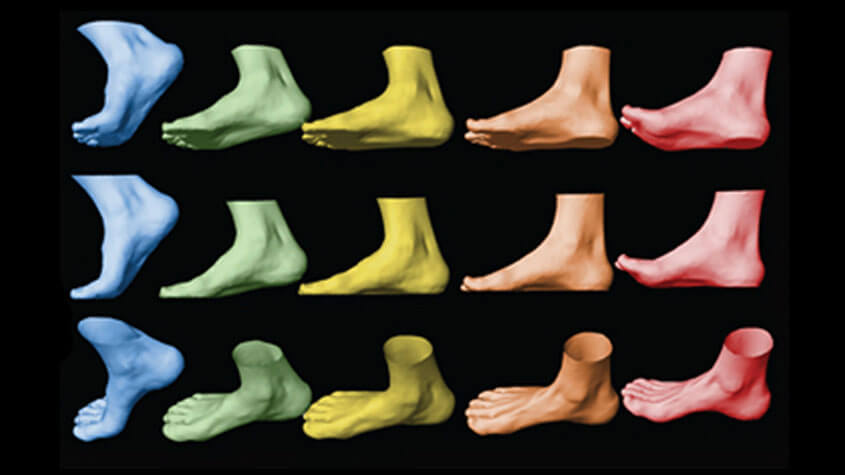
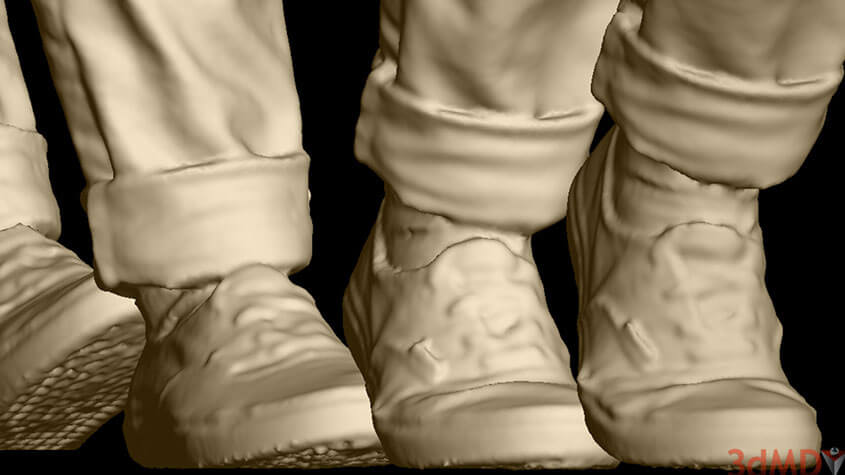
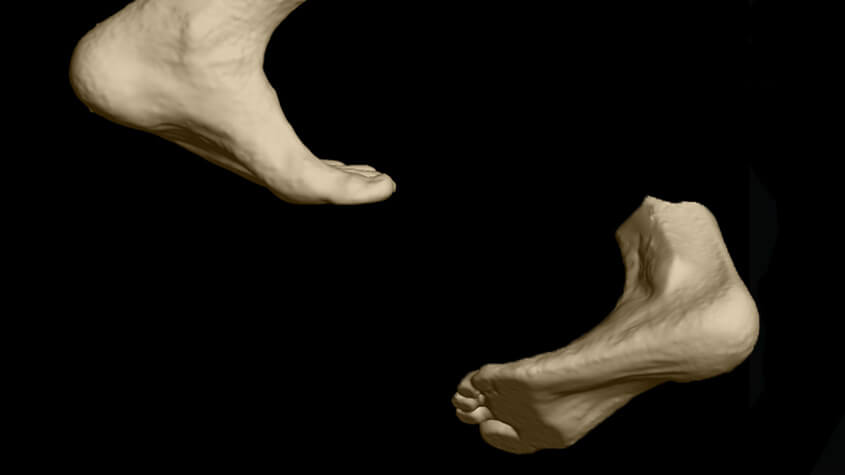
The human foot changes shape significantly between weighted, unweighted, and in-motion states… making it one of the most challenging anatomical structures to capture and reconstruct with near ground truth 3D-shape accuracy. Traditional measurement tools… laser and hand scanners that capture a motionless fully weighted foot, and pressure plates that record load distribution without 3D shape… miss the dynamic reality entirely. The 3dMDfoot system series was purpose-built to capture exactly that… the full foot including the plantar surface, in natural motion, with near ground truth 3D-shape accuracy.
Capturing 360-degree full foot coverage including the plantar surface dynamically in 3D/4D, the 3dMDfoot system delivers real-world dense-surface foot data at the anatomical fidelity that the most demanding applications require. In healthcare, 3dMDfoot data supports clinical teams in monitoring and measuring foot mobility, morphology, and dynamic shape change throughout treatment cycles… from diabetic foot assessment and deformity monitoring through to orthotic and prosthetic design and post-surgical evaluation. Beyond healthcare, the same near ground truth full foot geometry powers AI and Machine Learning foot model development… human factors and fit design for footwear, performance sports shoes, and orthotics across diverse subject populations… and real-world dynamic foot data for wearable tech and smart footwear development.
Whatever the application or use case, 3dMDfoot systems capture and reconstruct it… in full 3D/4D dense-surface detail.
3dMDfoot™ System Product Specifications
| Region of Interest: | Provides 360-degree full foot coverage [including the bottom] of one or two feet. Captures natural step with foot articulation dynamically in 3D over a period of time (4D). |
| Capture Speed Options (3D frames per second): | 1-40fps, 1-60fps, or 1-120fps with high precision 3D shape information generated for each frame, regardless of capture speed. Run system in record, burst, or single snap mode. |
| 3D Image Reconstruction Technique: | Sophisticated software-driven triangulation technique called Active Stereo Photogrammetry. |
| 3D Image Reconstruction per Frame: | Automatic generation of an individual 3dMD image from all stereo viewpoints within the system to create a single continuous 3D point cloud or mesh (no manual stitching or registration needed per frame). |
| 3D Shape Accuracy: | Delivers ‘near-ground truth’, high-precision 3D dense surface images with a linear accuracy range of 0.7mm or better… also known as first generation, Real-World data. |
| Output Options: | A progressive sequence of 3dMD images from a recording, a short progressive sequence of 3dMD images from a burst, and a single 3dMD image from a single snap. |
| Output. File Formats Supported: | obj, stl, ply, gltf, glb, x3d, 3mf, as well as all other industry-standard open formats for use in downstream 3dMD and third-party software. |
| Baseline 3dMDfoot System Configuration: | 3dMDfoot5 System captures a single foot. Incorporates optics-based technology with five (5) viewpoints synchronized with a robust LED lighting system. |
| Specialized 3dMDfoot System Configurations: | Depending on requirements [one or two feet; types of actions; areas of interest; etc.], 3dMD can configure the 3dMDfoot System to include additional MCUs to accommodate these requirements. 3dMDfoot system configurations range from the baseline of 5 viewpoints to 15+ viewpoints. |
| Camera Technology: | Industrial-grade Machine Vision camera technology. |
| Eye-Safe Lighting: | Safe and comfortable subject illumination within visible white light (100% LED lighting) which is necessary for prolonged sessions with subjects - no use of infrared (IR) or near Infrared (NIR) light waves. |
| 3dMD Image(s) Downstream: | Either 1) select the most optimal 3dMD images from the sequence [e.g. foot articulation, heel-strike, fully weighted, etc.] OR 2) import the entire 3dMD image sequence into the downstream third-party/in-house software to transition a project from 2D video, sparse-3D, or static-3D to a dynamic-3D/4D dense-surface mobility paradigm. |
| Environment: | Utilized in normal R&D lab, clinical, and studio environments. |
| Safety: | International UL and CE safety certification. |
| Upgrade Path to: | Any specialized 3dMDfoot System (add 5-10+ viewpoints). |
| Third-Party Device Synchronization: | For advanced customer teams who qualify, 3dMD offers a range of 3dMDsync Unit options – e.g. Synchronization Output only, Synchronization Output and Input, and Synchronization Output and Input with Frame Level timestamping functionality. |
| Techniques and Technologies NOT Used by 3dMD: | To confirm, 3dMD does NOT use lasers, depth sensor cameras, pro/consumer cameras, or infrared (IR)/near Infrared (NIR) light waves within its systems. 3dMD does NOT use a 'structured light' capture/reconstruction technique. |
| Technology Description Review Resource Prior to Publication: | If your team is describing 3dMD’s technology for publication, 3dMD is happy to review the section of the copy related to 3dMD and provide input, if needed, to ensure that the technology (only) is described correctly. Please contact review@3dMD.com. |

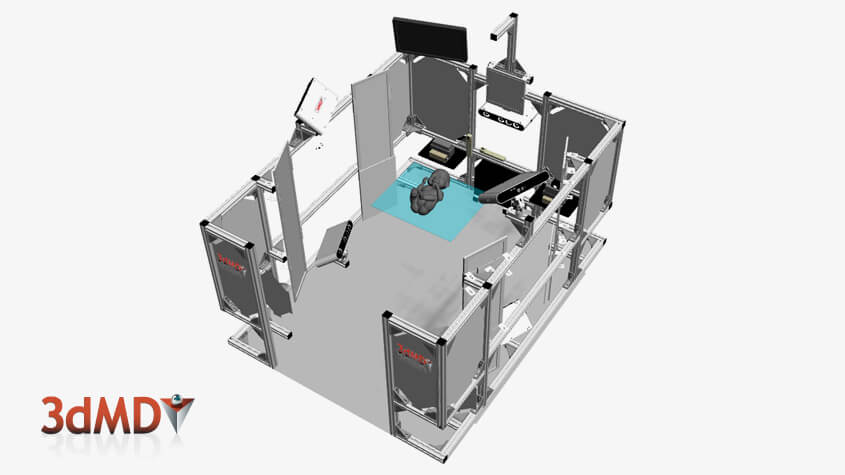
3dMDflex™ System Series
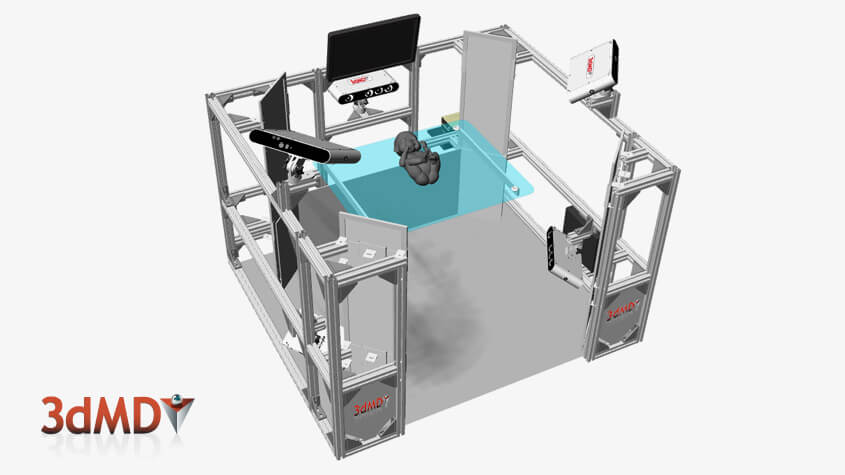
Not every region of human anatomy interest is best captured using a standard 3dMD system configuration. The 3dMDflex system is 3dMD’s purpose-built platform for specialized use case requirements… configured by 3dMD’s engineering team using its proprietary Modular Camera Units (MCUs) to capture and reconstruct the requested region of interest, 3D surface coverage, and dynamic range.
Built on the same software-driven Active Stereo Photogrammetry foundation as every 3dMD system, the 3dMDflex system delivers near ground truth 3D-shape accuracy dynamically in 3D/4D for any anatomical region or subject configuration. 3dMD defines the system architecture and configuration… the customer team implements it for their use case. Whether that is a specialized clinical research protocol, a unique human factors study, a novel AI training dataset requirement, or an engineering challenge that falls outside the standard product range, 3dMD’s engineering team configures the optimal MCU-based solution.
If you think your application demands real-world dense-surface 3D/4D human data from a region or configuration that no standard 3dMD system covers… talk to 3dMD.
3dMDflex™ System Product Specifications
| Region of Interest: | 3dMD can configure a 3dMDflex System to meet specialized requirements. Captures a range of images dynamically in 3D over a period of time (4D). |
| Capture Speed Options (3D frames per second): | 1-10fps, 1-30fps, or 1-60fps with high precision 3D shape information generated for each frame, regardless of capture speed. Run system in record, burst, or single snap mode. |
| 3D Image Reconstruction Technique: | Sophisticated software-driven triangulation technique called Active Stereo Photogrammetry. |
| 3D Image Reconstruction per Frame: | Automatic generation of an individual 3dMD image from all stereo viewpoints within the system to create a single continuous 3D point cloud or textured mesh (no manual stitching or registration needed per frame). |
| 3D Shape Accuracy: | Depending on configuration... delivers ‘near-ground truth’, high-precision 3D dense surface images with a linear accuracy range of 0.7mm or better… also known as first generation, Real-World data. |
| Output Options: | A progressive sequence of 3dMD images from a recording, a short progressive sequence of 3dMD images from a burst, and a single 3dMD image from a single snap. |
| Output. File Formats Supported: | obj, stl, ply, gltf, glb, x3d, 3mf, as well as all other industry-standard open formats for use in downstream 3dMD and third-party software. |
| Camera Technology: | Industrial-grade Machine Vision camera technology. |
| Eye-Safe Lighting: | Safe and comfortable subject illumination within visible white light (100% LED lighting) which is necessary for prolonged sessions with subjects - no use of infrared (IR) or near Infrared (NIR) light waves. |
| 3dMD Image(s) Downstream: | Either 1) select the most optimal 3dMD images from the sequence OR 2) import the entire 3dMD image sequence into the downstream third-party/in-house software to transition a project from 2D video, sparse-3D, or static-3D to a dynamic-3D/4D dense-surface mobility paradigm. |
| Environment: | Utilized in normal R&D lab, clinical, and studio environments. |
| Safety: | International UL and CE safety certification. |
| Upgrade Path to: | A more specialized 3dMD System to increase surface coverage of the region of interest. |
| Third-Party Device Synchronization: | For advanced customer teams who qualify, 3dMD offers a range of 3dMDsync Unit options – e.g. Synchronization Output only, Synchronization Output and Input, and Synchronization Output and Input with Frame Level timestamping functionality. |
| Techniques and Technologies NOT Used by 3dMD: | To confirm, 3dMD does NOT use lasers, depth sensor cameras, pro/consumer cameras, or infrared (IR)/near Infrared (NIR) light waves within its systems. 3dMD does NOT use a 'structured light' capture/reconstruction technique. |
| Technology Description Review Resource Prior to Publication: | If your team is describing 3dMD’s technology for publication, 3dMD is happy to review the section of the copy related to 3dMD and provide input, if needed, to ensure that the technology (only) is described correctly. Please contact review@3dMD.com. |