Concurrent surface electromyography and force myography classification during times of prosthetic socket shift and user fatigue. J Sanford, R Patterson, DO Popa.

Date: August 2017. Source: Journal of Rehabilitation and Assistive Technologies Engineering. Objective: Surface electromyography has been a long-standing source of signals for control of powered prosthetic devices. By contrast, force myography is a more recent alternative to surface electromyography that has the potential to enhance reliability and avoid operational challenges of surface electromyography during use.…

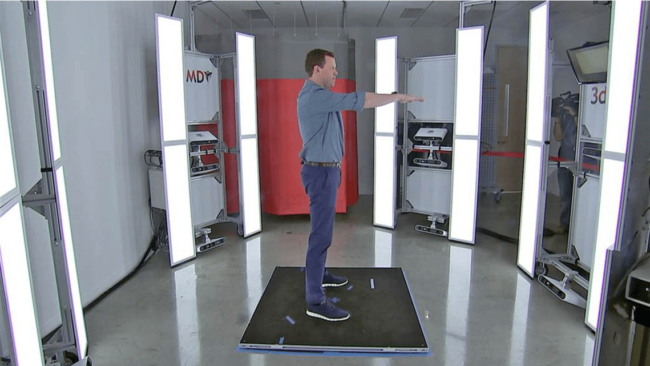
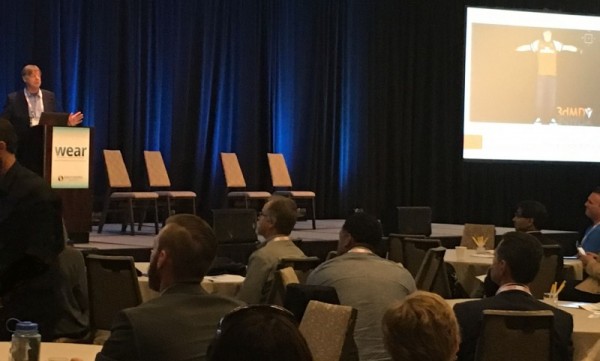
Watch Willie Geist get a 3dMD model of himself at the Under Armour factory.

During his tour of Under Armour’s factory with CEO Kevin Plank, Sunday TODAY’s Willie Geist gets a 3D body model of himself created with the 3dMD technology the company uses to make custom clothes for athletes.

The Technique for 3D Printing Patient-Specific Models for Auricular Reconstruction. RL Flores, H Liss, S Raffaelli, A Humayun, K Khouri, PG Coelho, L Witek.

Date: April 2017. Source: Journal of Cranio-Maxillofacial Surgery. Purpose: Currently, surgeons approach autogenous microtia repair by creating a two-dimensional (2D) tracing of the unaffected ear to approximate a three-dimensional (3D) construct, a difficult process. To address these shortcomings, this study introduces the fabrication of patient-specific, sterilizable 3D printed auricular model for autogenous auricular reconstruction. Methods:…

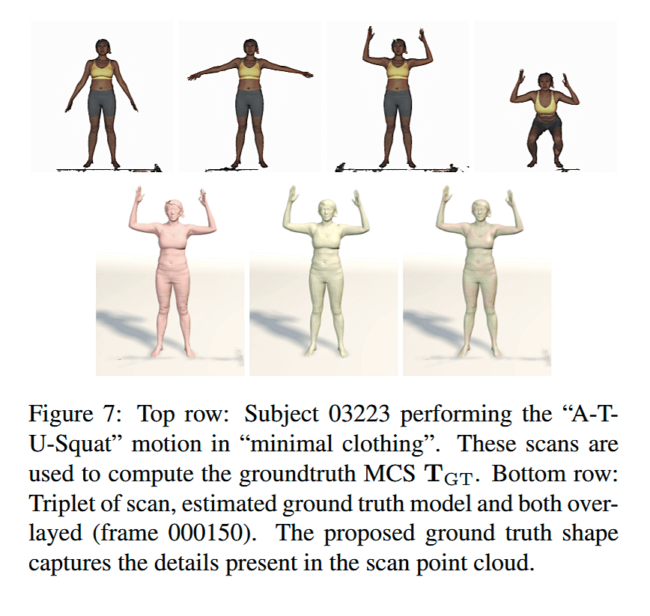
Detailed, accurate, human shape estimation from clothed 3D scan sequences. C Zhang, S Pujades, M Black, G Pons-Moll.

Date: March 2017. Source: researchgate.net (goo.gl/scholar/d1zUSr) Abstract: We address the problem of estimating human body shape from 3D scans over time. Reliable estimation of 3D body shape is necessary for many applications including virtual try-on, health monitoring, and avatar creation for virtual reality. Scanning bodies in minimal clothing, however, presents a practical barrier to these…

Digital design of patient-specific abutments for the retention of implant-retained facial prostheses. C Kincade, L McHutchion, J Wolfaardt.

Date: March 2017. Source: Presented at the 2017 Annual Meeting of the Academy of Osseointegration, Orlando, Fla, March 2017 and the 6th Triennial Conference for Advanced Digital Technology in Head and Neck Reconstruction, Amiens, France, May 2017. Abstract: The present report describes the digital design of patient-specific milled abutments for the retention of osseointegrated facial…

Orofacial rehabilitation with zygomatic implants: CAD-CAM bar and magnets for patients with nasal cancer after rhinectomy and partial maxillectomy. E King, C Abbott, L Dovgalski, J Owens.

Date: November 2016. Source: The Journal of Prosthetic Dentistry. Abstract: Nasal carcinoma extending into the premaxilla requires radical surgical excision including rhinectomy and partial maxillectomy. Rehabilitation is complex and involves the use of removable prostheses. Three patients treated with zygomatic implants and custom-milled bars to retain an obturator and nasal prosthesis are presented. Article: Orofacial…

Academics hook up with lingerie company to improve radiotherapy treatment.

As seen on the Sheffield Hallam website… Academics at Sheffield Hallam University are working with a lingerie company and Sheffield Teaching Hospitals NHS Foundation Trust to provide a new specially designed bra for some women undergoing breast radiotherapy, which they hope will improve accuracy of treatment and also help patients maintain dignity during radiotherapy. Working with…